
Public meeting
MnDOT is hosting a public meeting from 4:30-6:30 p.m. Wed, June 3 to share project plans, designs, detours and improvements for the Highway 30 project coming summer 2027.
Date: Wednesday, June 3
Time: 4:30-6:30 p.m.
Location: Stewartville Civic Center (105 1st St. E., Stewartville)
About this project
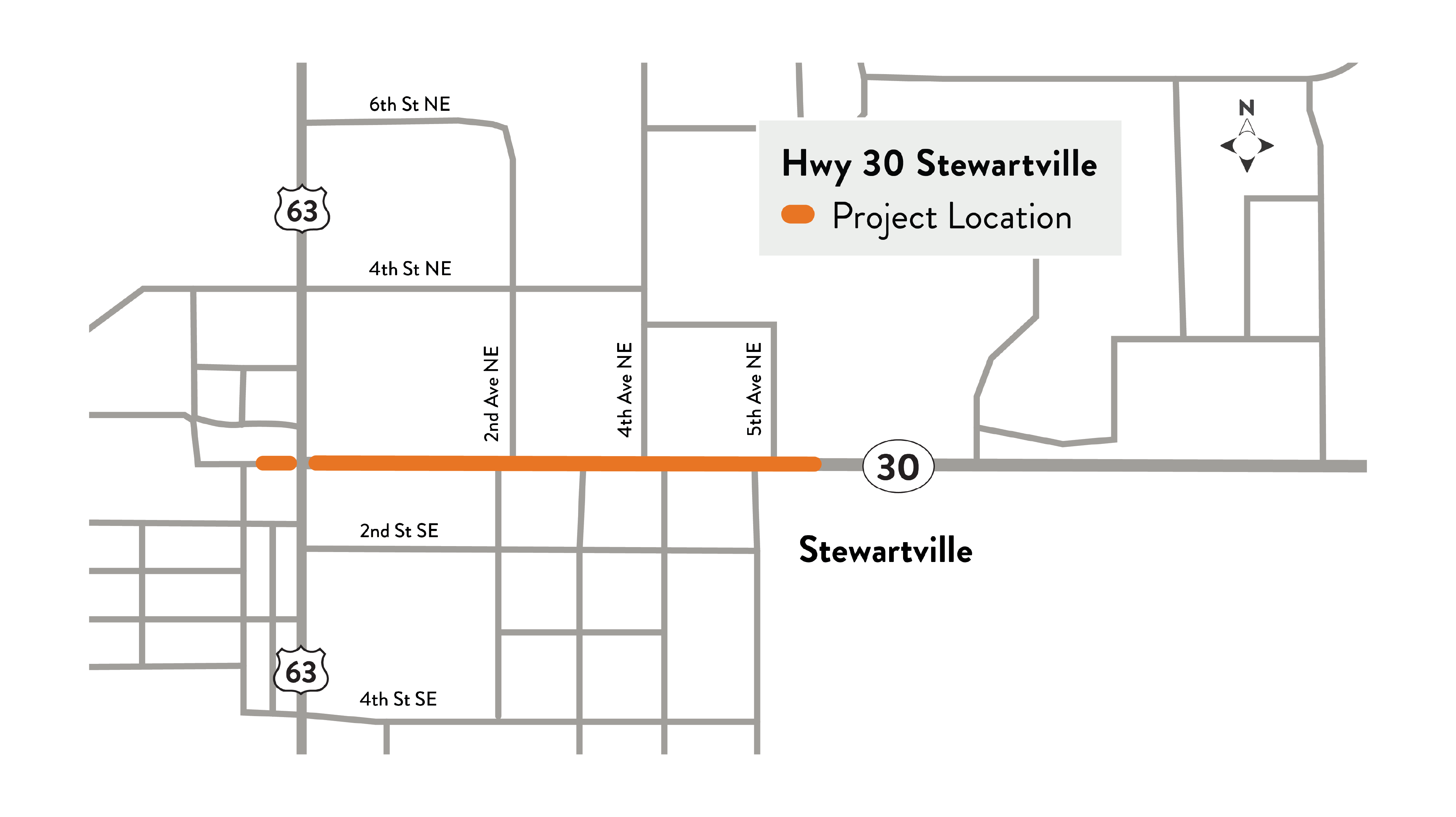
MnDOT is planning a resurfacing and roadway improvement project on Highway 30 in Stewartville between Highway 63 and 5th Ave. NE and just west of Highway 63 on 1st St. W. Construction is anticipated for summer 2027.
The project team is working on these improvements based on the concept designs and feedback from community members.
- Repave .5 miles of Highway 30 located entirely within the city limits of Stewartville.
- Replace the traffic signal at the intersection of Highway 63 and Highway 30.
- Improve pedestrian facilities on both sides of Highway 30 and at the intersection of Highway 30 and Highway 63.
- Improve accessibility of sidewalks and driveways to meet ADA compliance.
- Introduce traffic calming measures along Hwy 30 to improve safety.
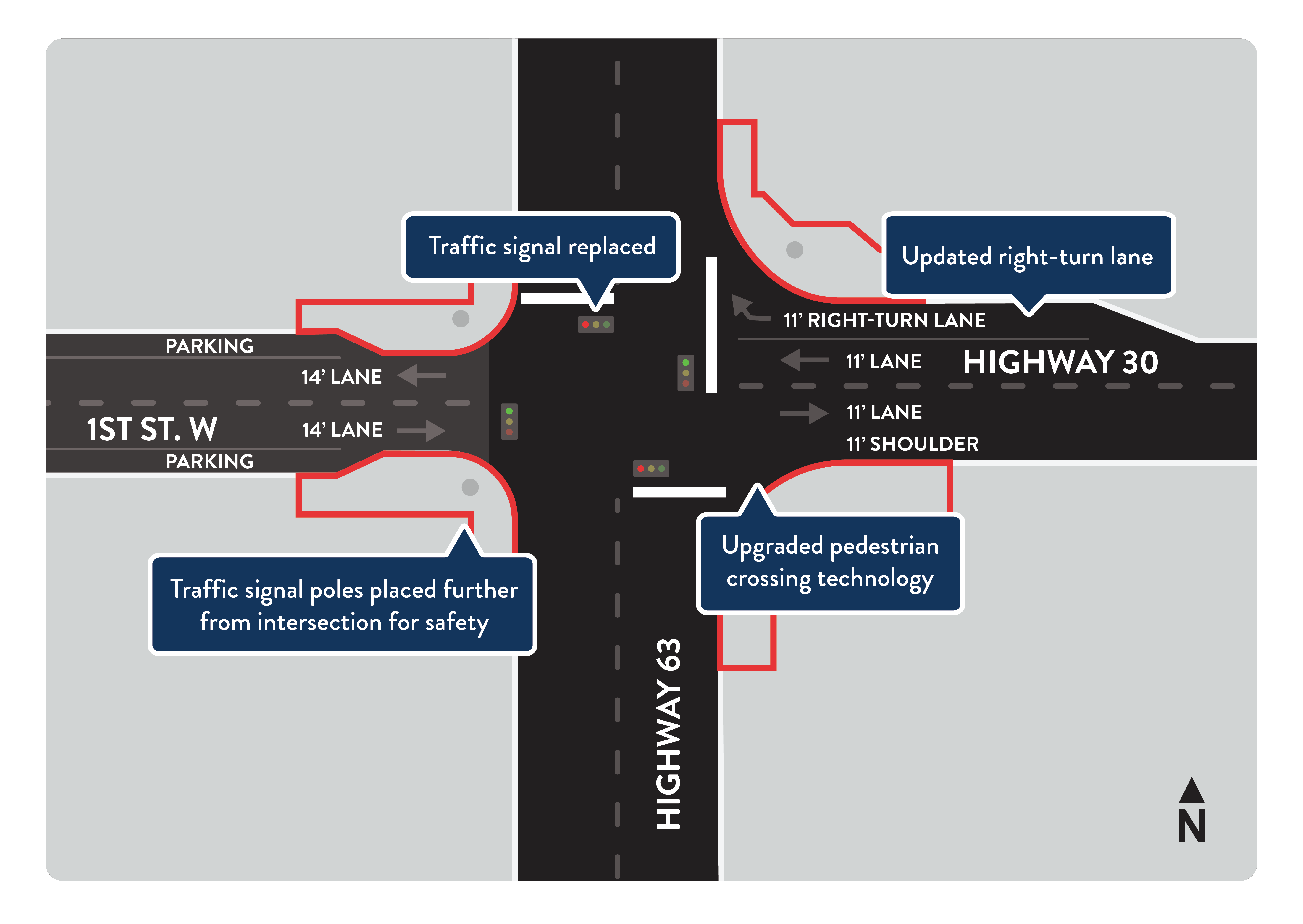
- Improve the right-turn lane and upgrade pedestrian crossings at the intersection of Highway 63 and Highway 30.
Detour and Construction Impacts
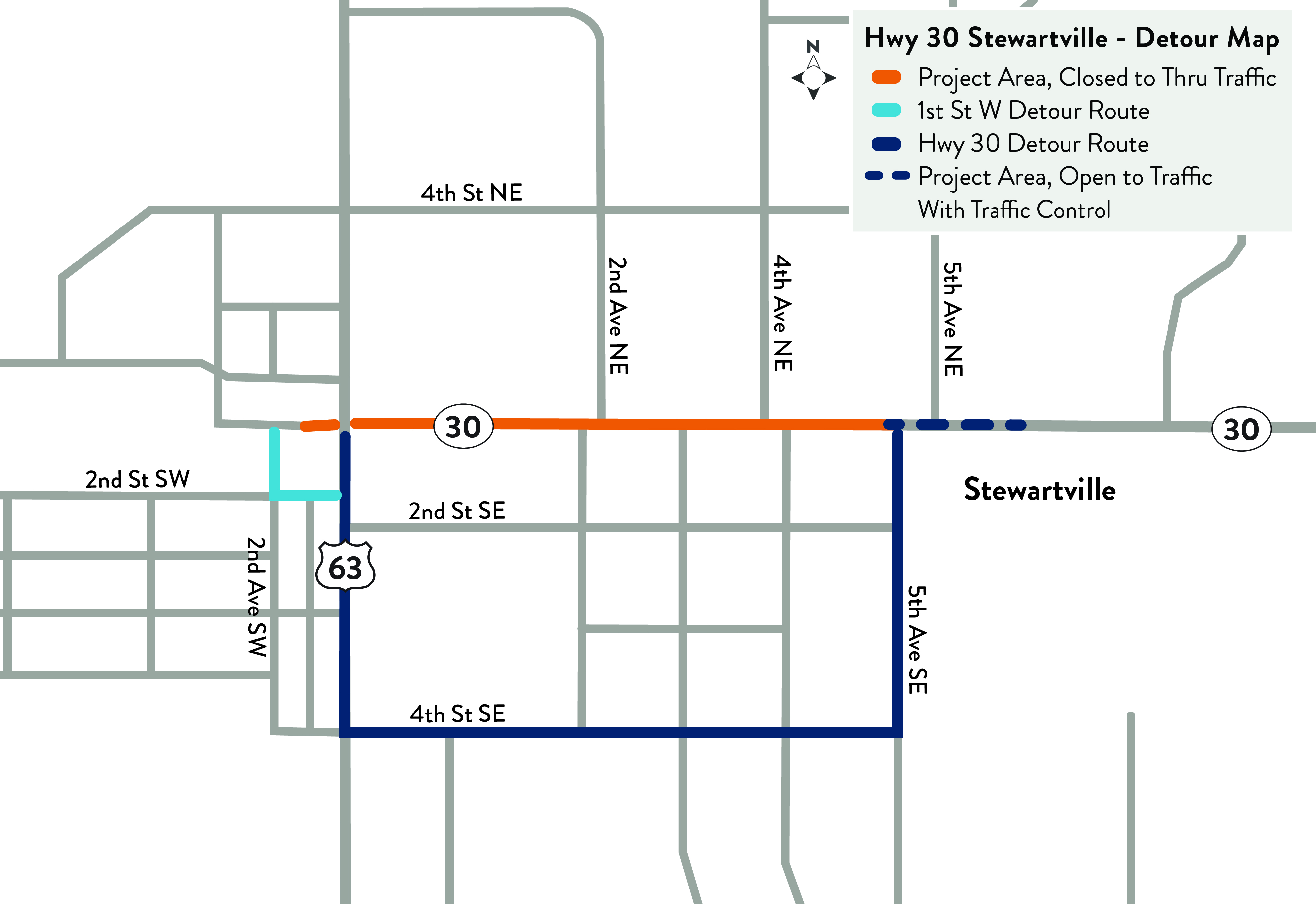
Highway 30 will be closed to through traffic for up to six weeks in summer 2027. Detours will route traffic around the project area. Eastbound Highway 30 traffic will be directed south on Highway 63 to 4th St. SE to 5th Ave. SE. Eastbound 1st St. SE traffic west of Hwy 63 will be directed south on 2nd Ave. SW and east onto 2nd St. SW. These detours are the same in reverse.
Access to homes and properties along the corridor will be maintained during construction. Crews will mostly work on one side of the road at a time, allowing residents to use the opposite side for access. Direction signage will be in place to direct traffic.
Temporary impacts to driveways may occur while crews are working directly in front of a property. In those cases, the contractor will provide advance notice and coordinate with the property owner.
Highway 30 Design
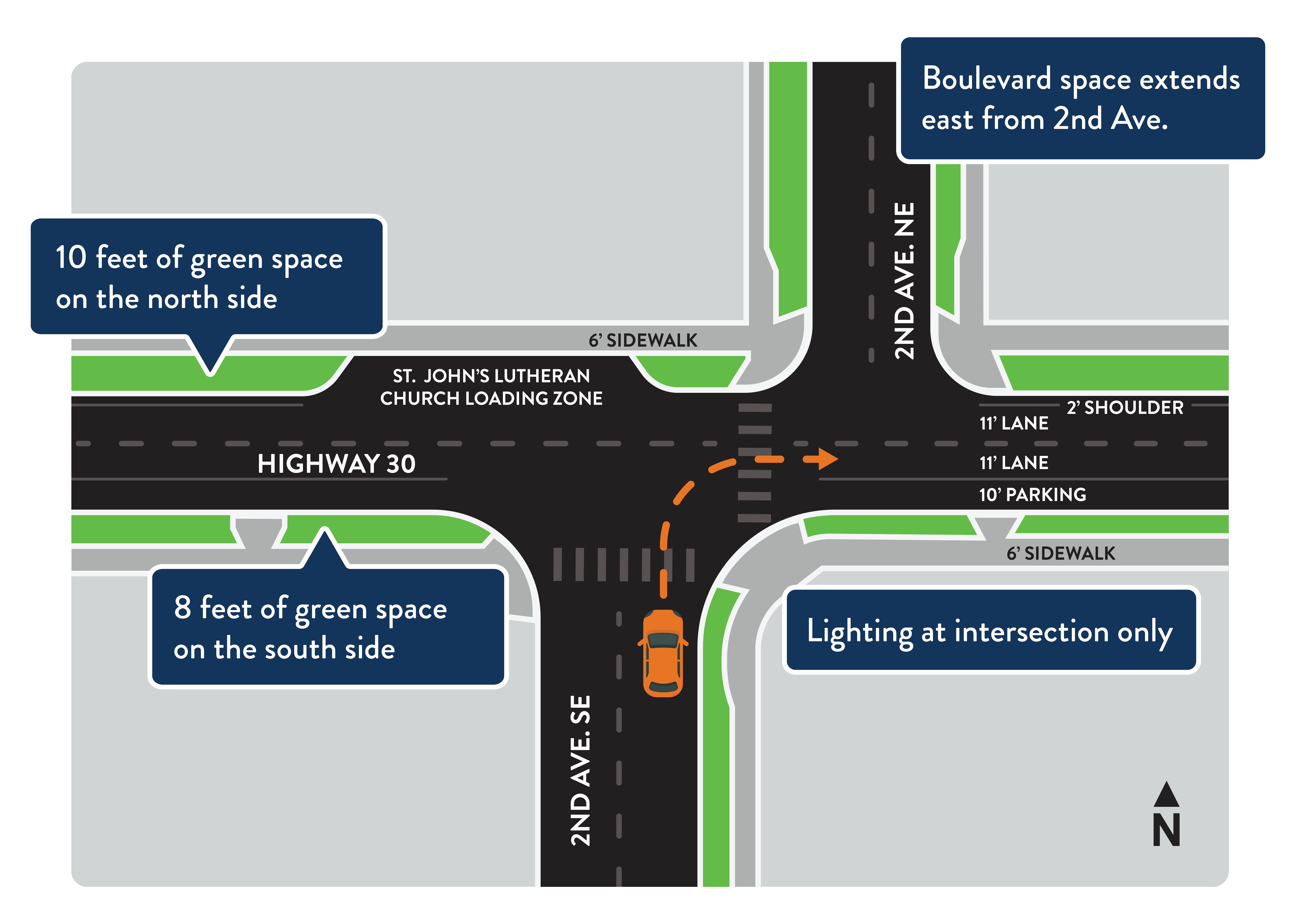
MnDOT has developed a design for the road informed by several years of feedback from community members and city officials. The design improves driveway access, limits impacts to traffic, and maintains key features such as on-street parking and a functional loading area for St. John’s Lutheran Church. It also meets ADA requirements which significantly improves access and mobility for all users.
This design will add 10 feet of green space on the north side and 6 feet on the south side east of City Hall. Lighting will only remain at the intersections. The design also includes a temporary loading zone for St. John’s Lutheran Church.
At the intersection of Hwy 30 and Highway 63, traffic signals will be replaced, and upgraded pedestrian crossing technology will be added. Traffic poles will also be placed further from the intersection for safety. Additionally, an upgraded right-turn lane will be added from westbound Highway 30 to northbound Highway 63.
Boulevard trees
MnDOT’s project plan for Highway 30 also includes planting boulevard trees in some places along the highway based on community feedback. Boulevard trees have many benefits to both safety and properties, including:
- Reducing average traffic speeds on commercial streets with pedestrians by 7 to 9 mph
- Reducing car accidents with pedestrians and bicyclists
- Reducing property and personal crime by up to 52%
- Increasing housing/real estate property values by 2% to 18%, or up to $7,130 more on house sale prices
- Encouraging business district visitors to stay longer and spend 9% to 12% more, boosting business success and longevity
- Reducing winter heating and summer cooling costs for adjacent homes and businesses
- Improving runoff water quality, soil quality and air quality
Design process
MnDOT heard feedback from community members and city officials in 2024 and 2025, helping determine a new street design that best fits community needs. The selected design will shift the Highway 30 center line north to provide an ADA-compliant sidewalk on the south side of Highway 30 with a boulevard. This allows for on-street parking on the south side of the street with a wider boulevard to improve sidewalks and driveway slopes.
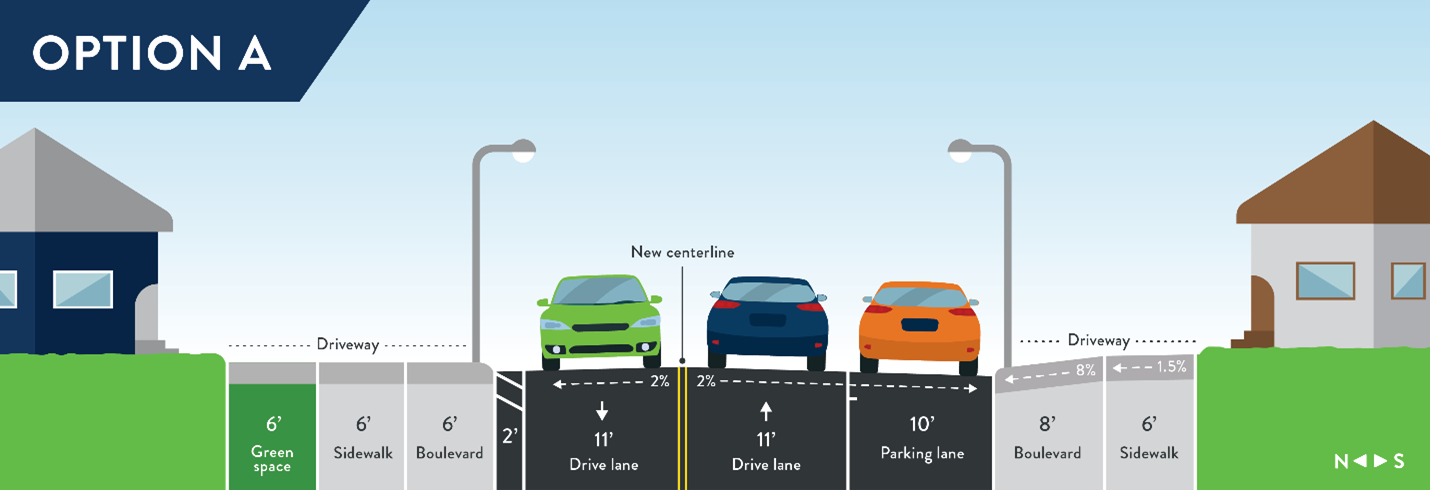
Compared to other proposed designs, this plan requires fewer impacts to properties and provides broader, longer-term accessibility benefits that will help reduce the need for future construction and disruptions.